
Sound artist Ada Reyes joins us
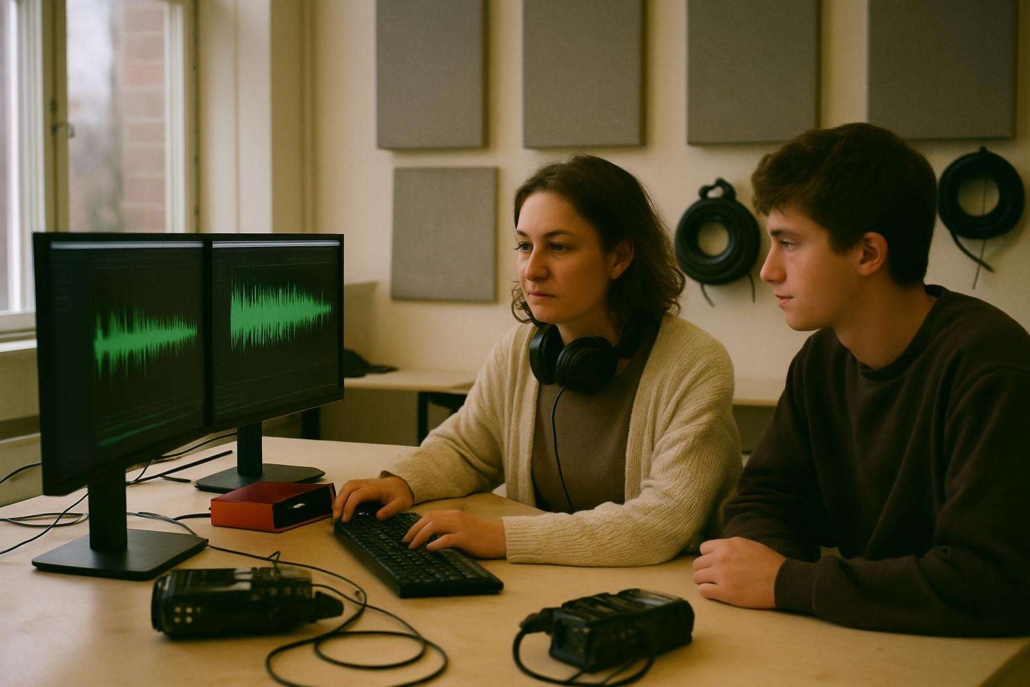
Ada Reyes joins the digital studio this week for six weeks, working with the sixth form and the Portfolio Year on field recording and composition for installation. She is the third visiting practitioner this year and the first to work in sound.
Her own work is mostly made outdoors, recorded over long walks through places most people drive past, and finished in a room she describes as the size of a cupboard. She says that is the only honest way to describe most studio practice, and she intends to spend six weeks proving it.
Six weeks, in three parts
- Weeks one and two: listening. Recording walks around the school and the streets near it, with a portable recorder each and one rule: record for twice as long as feels necessary.
- Weeks three and four: editing. Back in the lab, cutting hours of material down to minutes, and learning to hear what was actually recorded rather than what was meant to be.
- Weeks five and six: installing. Each student places a finished piece somewhere in the building, for a specific spot and a specific listener.
In her words
People imagine a studio as a big bright room. Most of mine have been cupboards, and the cupboard is not the problem. The problem is going into it with nothing. I want these students to come back from a walk with too much, and then learn what to throw away.
Ada Reyes
Ada trained as a violinist, stopped playing at twenty and spent the next ten years recording rivers, car parks and the insides of empty buildings. Her installations have been shown in a disused swimming pool, a multi-storey car park and, once, a lift. She is interested in what a sound does to a room, and what a room does to a sound.
For the students, the attraction is partly the kit and partly the permission. A recorder and a pair of headphones go further than most people expect, and a piece of work that lives in a stairwell does not need a gallery to exist.
What the students are making
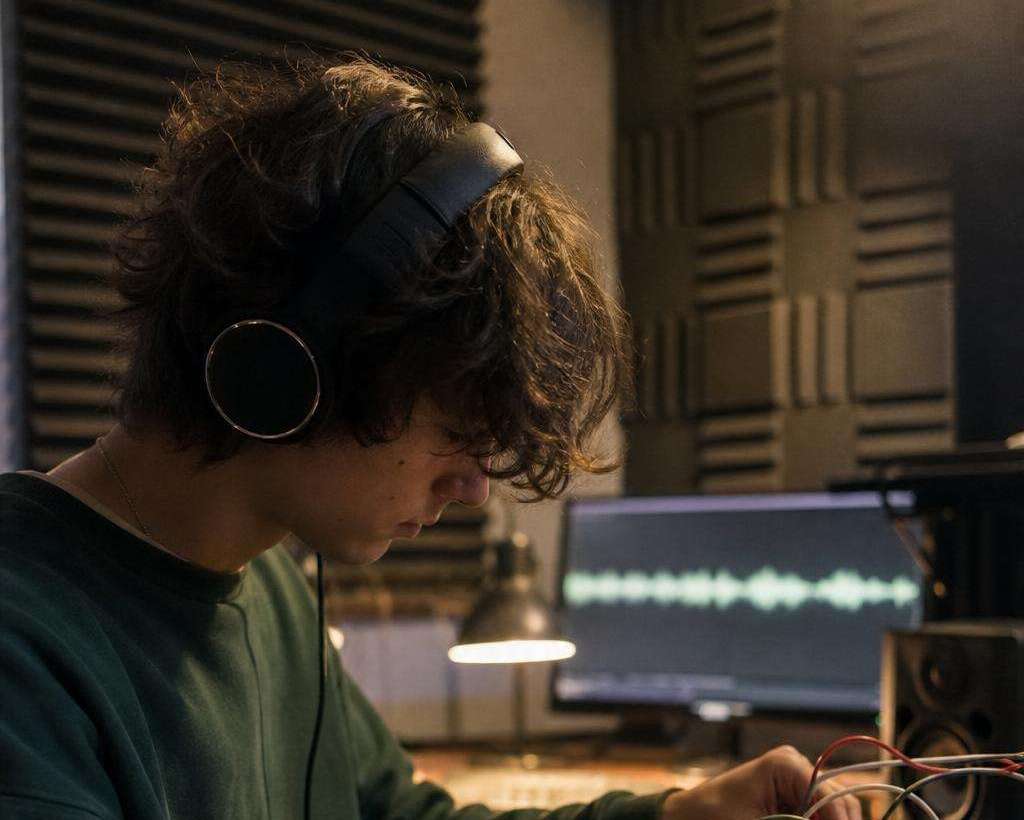
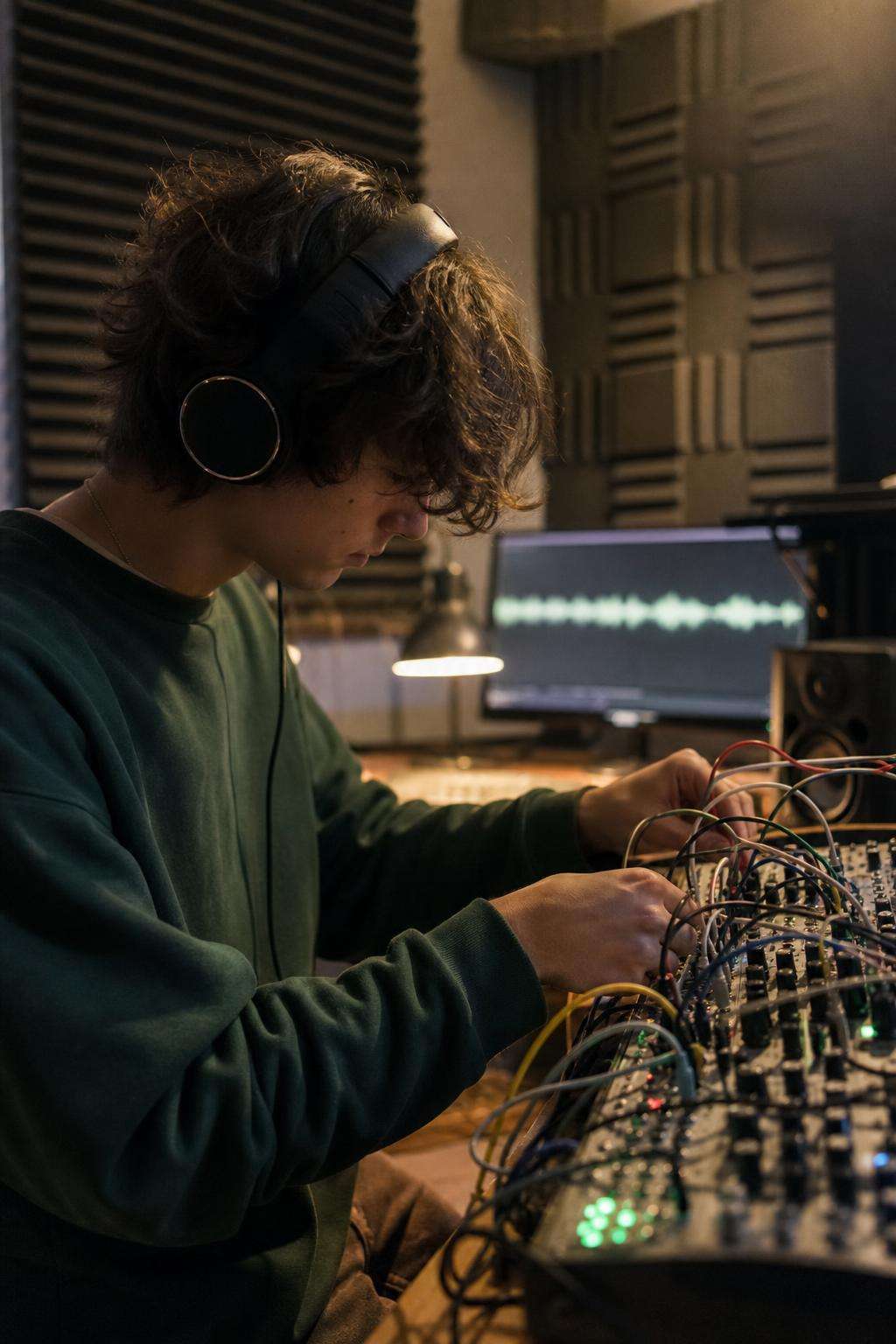
Eleven students signed up for the residency, from first-year sixth formers who have never recorded anything to a Portfolio Year student who has been building a modular synthesiser since September. Their starting points are already wildly different. One is recording the kiln room through a firing, from lighting to opening. Another has spent two walks under the railway bridge at the end of the road, waiting for the gap between trains. A third wants to record the building at night, empty, and play it back in the dining hall at lunch.
Ada’s only instruction so far has been to stop describing the finished piece. It does not exist yet, she tells them, and describing it too early is the fastest way to make sure it never does.
The kit
Everything the residency needs is already in the building, and the kit store lends it without a form.
- Twelve portable field recorders
- Contact microphones and a hydrophone
- The modular lab and four booths
- Speakers for installing anywhere in the school
Open sessions
Most of the residency is for the students enrolled on it, but two sessions a week are open to anyone in the school, whatever they study.
| Session | When | Who can come |
|---|---|---|
| Listening walk | Tuesdays, 3pm, from the main entrance | Any year group |
| Open lab | Thursdays, 4pm – 6pm | Anyone, no experience needed |
| Installation tour | Friday of week six, 5pm | The whole school, and parents |
Ines Moreau, who runs the kit store and the radio rota, has set aside a shelf of recorders for the open sessions. As with everything else in the store, you sign nothing: you take it, and you bring it back.
Do I need to know anything about music?
No. Several of the students on the residency have never made a sound piece before. Listening is the skill, and it is taught from the first walk.
Can day pupils come to the evening sessions?
Yes. The studios are open to every student until ten, and the open lab finishes at six.
The installations go up in the final week. If you are in the building that Friday, follow the headphones.

